As an Amazon Associate, this website earns from qualifying purchases.
The best enclosed 3D printer needs to suit the file, material and workspace. These are three complete machines with enclosed bodies. Compare the useful build space, the parts you need to reach and the equipment in the exact package. A closed case is one feature of the whole setup.
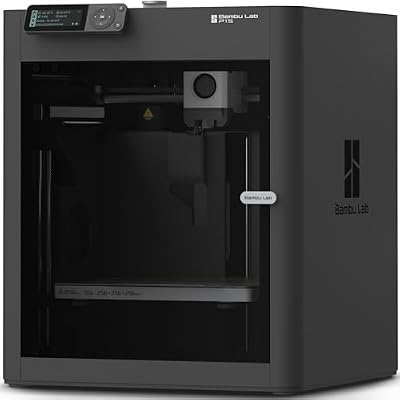
#1. Bambu Lab P1S
Bambu Lab P1S
Our verdict:
Larger enclosed cube
Compare it when the file needs its larger stated cube and the permitted material fits the job.
View on Amazon - Plastic and glass enclosure.
- 256 × 256 × 256 mm stated build cube.
- ABS and ASA listed as ideal.
Keep in mind: Multicolor printing depends on the AMS configuration, and the solo printer does not include every optional feeder.
The P1S has a plastic and glass enclosure. Its stated build cube is 256 × 256 × 256 mm. That is the largest listed cube in this group. Check the sliced file to decide whether the extra space matters.
Automatic bed leveling is included. The maker lists ABS and ASA as ideal materials. PA and PC are described as capable. Carbon or glass fiber filled polymers are not recommended. Keep those material limits with the exact spool profile.
Multicolor work needs an AMS setup. Check the selected solo offer before counting any feeder as included. Optional equipment also needs its own space in the work area.
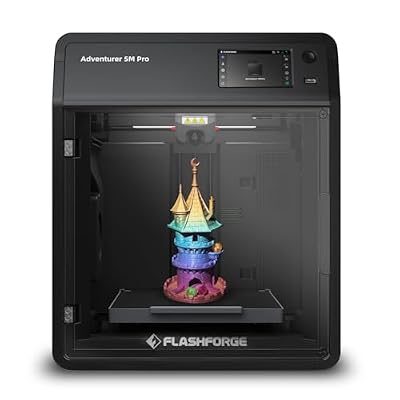
#2. Flashforge Adventurer 5M Pro
- Enclosed body with a 220 × 220 × 220 mm build volume.
- Tool-free quick-release nozzle replacement.
- HEPA and activated carbon filtration.
Keep in mind: Listed filters do not settle the room exposure-control plan; follow the machine and material guidance.
The enclosed 5M Pro has a stated 220 × 220 × 220 mm build cube. Its nozzle system permits tool-free replacement. Read the exact replacement steps and check which nozzle the selected kit includes.
Its material table pairs PLA and PETG with a 0.4 mm nozzle. TPU is listed with a 0.6 or 0.8 mm nozzle. Keep nozzle choice and material choice together; a list of optional sizes is not a list of parts in the box.
HEPA and activated carbon filters are listed hardware. Their presence does not settle the room exposure-control plan. The maker does not provide a supported multicolor conversion path for this model.
#3. Anycubic Kobra S1 Printer Only
- Enclosed CoreXY structure.
- 250 × 250 × 250 mm build volume.
- Multicolor equipment sold separately.
Keep in mind: TPU is limited to single-color printing and cannot run through ACE Pro for multicolor use.
The Kobra S1 is an enclosed CoreXY machine with a stated 250 × 250 × 250 mm build cube. The selected offer is the printer only. Multicolor equipment is separate.
The listing says an ACE Pro from Kobra 3 needs an upgrade kit for multicolor use with Kobra S1. Check the exact feeder version. Read the maker's current upgrade notes before reusing it. A shared ACE Pro name does not settle every setup.
The maker lists PLA, PETG, TPU, ABS and ASA. TPU is limited to single-color use and cannot pass through ACE Pro for multicolor printing. Keep that feed-route condition with the material choice.
Factors to consider when choosing the best enclosed 3D printer
Separate the shell from chamber control
Read the exact material's guide. Check the conditions it needs. If it needs controlled chamber heat, check how the selected machine provides it. A nozzle or bed heat limit does not establish active chamber heating.
Choose from the material table and the full setup guide. An enclosure label does not replace either one. Our ABS buying guide focuses on that material's selection checks.
Leave room for access
Plan space to open a door or panel and remove the plate. Check how filament is loaded and how you will reach service parts. Keep optional feed equipment in that layout too.
The Kobra S1 maker lists machine dimensions of 400 by 410 by 490 mm. Those describe the machine, not all working clearances. Use the guide for the exact setup. Do not rank every machine's desk needs from build-cube dimensions.
Check the complete color package
The solo P1S and Kobra S1 need their own optional multicolor equipment. Confirm the exact package and feeder version before planning a color job. The 5M Pro has no maker-supported multicolor conversion path in the retained guidance.
Check feeder materials separately from printer materials. A material listed for the printer does not establish that it can travel through every attached feeder.
Plan service before filling the workspace
Find the plate-care steps and the exact nozzle assembly in the maker guide. Keep room to perform those tasks. A tool-free mechanism is a design feature, not a result from a timed service test.
Use the maker's shutdown and cooling steps before work on heated parts. Do not assume that two assemblies fit each other because their nozzle openings share a size. Check the complete replacement part named for the model.
Keep the file and profile used for a job. If you change a nozzle or material, review that setup record. The slicer guide explains file preparation, and the cost worksheet lets you count the material your own project uses.
How We Picked
We checked these exact complete-printer offers. We compared their closed bodies, stated build space and setup rules. Each selected offer had qualifying new US availability at the check. We kept solo machines separate from packages with extra color equipment.
We have not tested enclosure noise or room exposure control. Listed filters and heat limits do not establish those results. The disputed 5M Pro bed-temperature field is omitted. Use the exact machine and material instructions, then check current package contents before buying because offers can change.
Verdict on the best enclosed 3D printer
Choose the best enclosed 3D printer around the material and a layout you can operate and maintain. Compare the P1S's larger listed cube, the 5M Pro's nozzle system and the solo Kobra S1's configuration. Check the full work area and any extra feeder before ordering.