As an Amazon Associate, this website earns from qualifying purchases.
The best ABS 3D printer starts with the exact ABS spool and the room where you will use it. These three enclosed machines list ABS support. Compare their stated limits with the material’s own instructions.
Check the whole sliced job and its setup needs before choosing from a build cube or heat limit.
#1. Anycubic Kobra S1
Anycubic Kobra S1
Our verdict:
Hotend and bed limits
Compare its stated heat limits with the exact ABS spool’s requirements, then check the room and sliced job.
View on Amazon - 320°C nozzle and 120°C bed limits.
- Enclosed 250 × 250 × 250 mm build volume.
- ABS appears in the manufacturer's material list.
Keep in mind: Allow working clearance beyond the listed machine size. Multicolor equipment is separate in this solo offer.
The Kobra S1 lists a 320°C nozzle limit and a 120°C bed limit. These are maximum specifications. Use the exact ABS spool’s guidance for the operating profile.
Its stated build cube is 250 × 250 × 250 mm. That sits between the P1S and 5M Pro in this group.
The listed machine dimensions describe the printer itself rather than installation clearances.
This is the solo Kobra S1 offer. Multicolor equipment is sold separately.
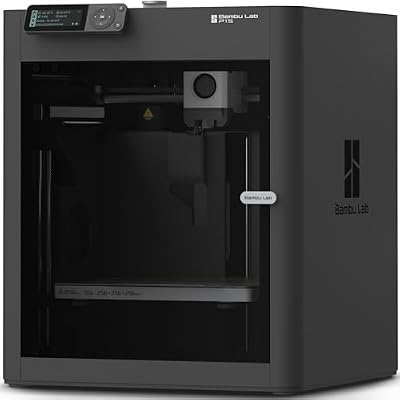
#2. Bambu Lab P1S
Bambu Lab P1S
Our verdict:
Larger build cube
Compare it when an ABS job needs its larger stated build cube and the exact material profile is suitable.
View on Amazon - 256 mm build space on each axis.
- Enclosed plastic and glass shell.
- ABS is listed among the ideal material families.
Keep in mind: Multicolor printing requires the AMS configuration.
The P1S maker lists ABS as an ideal material. Its plastic and glass shell surrounds a stated 256 mm cube.
Check that space against the sliced file. Its stated bed maximum is 100°C. A higher heat limit on another machine is useful only when the chosen material needs it.
Multicolor printing requires the AMS configuration.
Carbon or glass fiber filled polymers are not recommended.
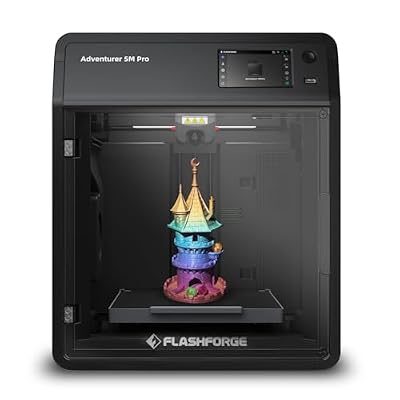
#3. Flashforge Adventurer 5M Pro
- Enclosed 220 × 220 × 220 mm build volume.
- 280°C maximum nozzle temperature.
- ABS and ASA appear in the filament table.
Keep in mind: Filter hardware does not settle the room exposure-control plan; follow the machine and material guidance.
The 5M Pro has a tool-free nozzle mechanism. It lists ABS and ASA in its material table. Check the service steps for the exact nozzle.
Its stated build cube is 220 × 220 × 220 mm. That is smaller on each axis than the other two picks.
The filters are listed hardware. Their presence does not settle the room exposure-control plan.
The maker does not provide a supported multicolor upgrade path for the 5M Pro.
Factors to consider when choosing the best ABS 3D printer
Start with the filament requirements
Choose the exact ABS formula first. Check its nozzle and bed requirements against the machine guide. Check any chamber conditions too.
Treat a maximum temperature as a specification, not a promise about the finished part.
Separate enclosure from chamber control
If the filament needs controlled chamber conditions, check how the exact machine provides them. A closed shell alone does not establish active chamber control.
Plan the workspace independently
Use the machine installation instructions and filament handling guidance to plan ventilation.
Allow for door movement, spool access and maintenance when assessing the available space.
Plan the room as well as checking the material list.
Check the complete configuration
Confirm which equipment is included and which additions your intended workflow requires.
Resolve the material setup and room plan before adding color equipment.
Inspect an ABS job before choosing build space
Use a real file at its final scale. Open it in the profile for the intended machine and nozzle. Check the full pose, including supports and print aids. The bare model’s longest edge is not the whole job.
If the part needs to be split, plan the joins before choosing a smaller cube. Check access to the seam and the part’s intended use. A larger machine can help only when the useful pose needs that space.
Use the slicer guide to inspect the job. Keep the selected material profile with the file. A machine’s maximum temperature is a limit, not a recommended setting for every ABS blend.
Plan access and care with the material
Check the installation guide for room to open the enclosure and remove the plate. Leave access to the spool and the parts that need routine care. Machine dimensions do not include every working clearance.
Use the printer and filament instructions to plan the process. The NIOSH makerspace guide is a wider room-planning reference. An enclosure or filter label does not by itself assess an occupied room.
Keep material use separate from other setup costs in the cost worksheet. Count the supplies and equipment the exact workflow needs. We have not measured print finish or exposure control on these machines.
How We Picked
We checked the exact selected configurations for new US offers below this site's strict ceiling. We compared their supported features with the reader's task. The links refer to those configurations, so check the package before ordering. Offers can change.
We have not tested these products. Specifications are listed limits. They do not establish how every job will turn out. Use the exact maker instructions for the machine and material.
Frequently asked questions
Can a 3D printer print ABS plastic?
The Bambu Lab P1S lists ABS among its ideal material families.
The FLASHFORGE Adventurer 5M Pro and Anycubic Kobra S1 also list ABS support.
Check material support, hotend and bed requirements, chamber design, and workspace ventilation separately before choosing a configuration.
Is a 3D printer worth it?
Base the decision on the parts you intend to make, expected use, and the complete setup.
For ABS, check manufacturer material guidance and plan the workspace, ventilation, consumables, and maintenance before committing.
Verdict on the best ABS 3D printer
Choose the best ABS 3D printer around the spool, sliced file and complete setup. Compare the Kobra S1’s stated heat limits, the P1S’s larger build cube and the 5M Pro’s nozzle system.
Finish the material and room checks before ordering. None of these listed features replaces the exact operating instructions.